Literary Tips & Tutorials by Laura
  • Home
  • Tutorials
    • Facebook Profile or Page?
    • Effective Websites
    • Book Trailers
    • Your Online Presence
    • Building Your Website
    • Navigating the Social Media Maze
  • About Me

             Free
Marketing Guide

        Sign up for my email updates
       and get a free marketing guide!

SIGN UP

The Golden Rule of Working with Artists, Editors, and Other Professionals

10/8/2015

0 Comments

 
Picture
Publishing a quality book isn't cheap. Cover artists, graphic designers, illustrators, editors... To most of us, the cost of these services hurt. 

I've noticed a disturbing trend. Many authors and publishers try to get around these expenses by either settling for low quality work or underpaying talented professionals. Both of these choices are damaging to our entire publishing industry. 
Picture
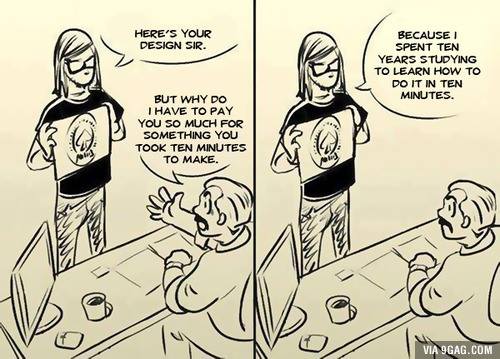
Image source: http://9gag.com/gag/avgZAwZ?ref=fbp
As you see in the image above, professionals can take years and thousands of dollars developing their expertise. Yet, many of us don't take this into account when asking for work bids and only look for the cheapest price. Because of this, many artists (I categorize editors and such as artists because what they do really is an art form) struggle to make a living through their craft, just like authors. 

Those who use low quality work ruin more than their own sales and reputation. By pumping out terrible books, consumers, bookstores, and libraries are starting to avoid entire publishing styles. Self-publishing and small presses are getting the worst of it. Most libraries and bookstores I've worked with won't accept a title that is self-published, and their acquisitions teams are very suspicious about titles from small presses even though there are many amazing books published via both these means.

​Why do we sabotage ourselves like this? Why underpay qualified and talented professionals? What is the true price you're paying when trying to save a buck? 

I hear authors complain that their family and friends claim that they want to support them, yet they're the ones that expect "family discounts" or free books. Wouldn't supporting an author mean paying for their book instead?

When you're shopping around for work bids, take a moment to consider: Are you paying these professionals how you would like to be paid for the work you do? 

Be sure to sign up for my email updates so you'll be in the loop and follow me on Twitter and Facebook! 
0 Comments

The Controversy of Vanity Press

6/27/2015

4 Comments

 
Picture
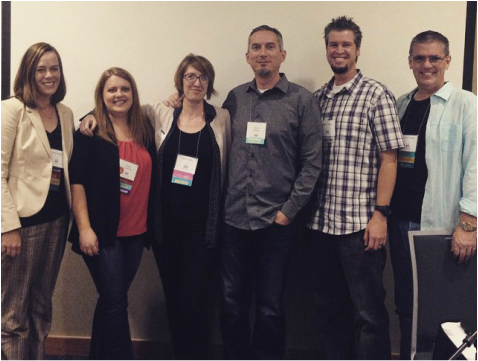
At LDStorymakers 2015, I was shocked to hear James Dashner, New York Times/USA Today Bestseller and author of The Maze Runner series say that vanity press can actually be a good thing. How could a bestselling author say this when, in today's publishing world, the words "vanity press" are usually accompanied with either gasps or mocking laughter? I set out to find answers.

What is vanity press and why is it so hated?

"Vanity Press" is a blanket term for any publisher to which you pay money. 

Why all the hate? There are several reasons:

  • Since authors pay vanity presses for publishing services while traditional publishers pay the author, many consider it backward. 
  • Vanity Presses are known as the ambulance chasers of the publishing industry. If you've ever submitted your work for copyrighting, you've probably received at least a few offers from vanity presses to publish your work for a fee. 
  • The poor quality stigma: I can't tell you how many times I've heard authors say that "vanity publishers will publish your grocery list for a price." 
  • There is also the unfortunate fact that many authors have been cheated by dishonest publishers. The details range from unkept promises to flat-out scams. These occurrences have tainted this publishing option. 

Debunking Vanity Press

Why does James Dashner say that vanity press can be a good thing?

"I am a big believer in all avenues to publishing," Dashner stated. "Everyone was telling me, like on threat of death, 'Don't ever give money to a publisher.' But I did. And it was the best decision I've ever made because that started the process . . . That lead to my Shadow Mountain deal, which helped me get into conferences and to make connections, and eventually, that lead me to meeting Sarah Zarr. Sarah Zarr then introduced me to her agent, who is now both of our agents. I have never, ever, regretted in the slightest what I did."

Do you realize that, according to this blanket term, Amazon's ever popular CreateSpace is a vanity press? Just as you would with any other vanity press, they charge authors to publish. Amazon will "print your grocery list for a price" and there is no content quality control.

Why aren't authors outraged by this? 

Amazon and other vanity presses have successfully rebranded this vanity press service as Print on Demand. Amazon offers convenient services and pricing to fill the ever growing need of indie and self-publishing and provide a top brand name that authors trust. In reality, they offer the same or often less services as many vanity presses. (Some vanity presses out there that do quality control, author education, marketing and distribution, etc.)  

Should I use a vanity press?

It all depends on your individual personality, needs, and resources. It worked for James Dashner because he's an extremely driven and resourceful author and businessman. He knew what he wanted, educated himself, and worked hard to get where he is. If you have his skills, work ethic, and the money to do it...why not? 

Please remember there is no one-size fits all in publishing. Do your research and decide what best fits your own style and needs as an author. The important thing is to do what works best for you and to just get your work out there!  

I'll be posting more soon. In the meantime, sign up for my email updates so you'll be in the loop! Get exclusive content when you follow me on Twitter and Facebook! 
4 Comments

Four Things to Know When You Publish from James Dashner, Heather Moore, J Scott Savage, Peggy Eddleman, and Tyler Jolley - LDStorymakers Panel 2015

6/12/2015

0 Comments

 
Picture

What to Expect

"There is no book on how to be an author. Your publisher doesn't give you a handbook. You're left in the dark a lot and have to find your own way a lot. You feel like such a noob when you start out. Network with other authors. Find out what to expect." - Peggy Eddleman

Network and Ask Questions

"Very rarely does it happen on your timetable." - Tyler Jolley

"It's a very crazy rollercoaster of ups and downs, rejections, exceptions, fans, etc." - Tyler Jolley

"Thinking that you accomplished one thing doesn't mean that you don't have to worry. It doesn't matter where you get, there's still things you stress about." - J Scott Savage

"There's a fine line between having realistic expectations and letting yourself be a little jaded. There are some depressing statistics. When they say that only one out of a thousand people get published who submit manuscripts, you've gotta say, 'I feel sorry for those other 999 son of a guns, because I'm going to be the one that gets published." Maintain some realism. It may take a while, but my favorite quotes is, 'There is one word for a persistent author: published.' It may take you five years, ten years, fifteen years, but it will happen if you improve your craft, improve your skills, and you keep doing what you're supposed to (in terms of submissions and seeking feedback), you will get published." - James Dashner

"Don't compare yourself to other writers. You have your own journey." - Heather Moore

Trust the Professionals 

"It's best not to get too attached to your title or cover." -Peggy Eddleman

"There are times when you say, 'Here's my input, do your job.'" - J Scott Savage

"Remember that your cover designer probably hasn't read your book. Don't tick them off. You have to have confidence in them. They know what's going to sell." - Tyler Jolley

"I have a very good relationship with my editor at Random House. We obviously both have the same goals, so she's always seeking my advice on covers, but I'm also very aware that I never have that final power or final say. In the end, you have to trust the marketing and sales people, they know what they're doing." - James Dashner

To Be Successful

"Bestselling authors constantly have doors shut in their faces. They keep working and submitting. They're always growing their craft. They're always helping other writers. Be a nice person who is easy to work with. Authors who get published the most are those who are always working and are willing to make changes." - Heather Moore 

"I cannot stress this enough. I know for a fact that the number one factor in my career that has made me take these little baby steps to success has been the professionalism side of things. Do not burn bridges. Everything you do, pretend you are not a writer. Be a CEO. In any industry, people want to work with people they like." James Dashner


James Dashner is a New York Times, USA Today, Wall Street Journal, Publishers’s Weekly,Indiebound Bestseller, and author of The Maze Runner series.
Website: http://jamesdashner.com/
Blog: http://jamesdashner.com/blog/

Heather Moore is the USA Today bestseller and award-winning author of more than a dozen historical novels and thrillers under the pen name H.B. Moore. She also writes women’s fiction, romance, and inspirational non-fiction under Heather B. Moore, including The Newport Ladies Book Club, the Amazon bestselling anthology series A Timeless Romance Anthology, the Aliso Creek series, and the USA Today bestseller Heart of the Ocean. 
Website: http://www.hbmoore.com     
Blog: http://mywriterslair.blogspot.com

J Scott Savage the author of sixteen novels including the Farworld series from Shadow Mountain, the Case File 13 series from Harper Collins, The Shandra Covington mystery series, and the new Mysteries of Cove series coming September 29th. 
Website: http://www.jscottsavage.com/     
Blog: http://www.jscottsavage.com/blog/

Peggy Eddleman is the author of SKY JUMPERS (a Bluebonnet Nominee, a Beehive Nominee, a Golden Sower Nominee, a South Carolina Children’s Book Award Nominee, an American Booksellers Association’s ABC Best Book of 2013, a NYPL’s 100 Books for Reading and Sharing selection, and a Kids Indies Next selection) and its sequel, THE FORBIDDEN FLATS. 
Website: http://peggyeddleman.com

Tyler Jolley is the author of The Lost Imperials series. 
Website: http://jolleychronicles.com/     
Goodreads: https://www.goodreads.com/author/show/6438572.Tyler_Jolley

0 Comments

5 Essentials To Get Ready For Publishing

4/22/2015

0 Comments

 
Writing your book was only the beginning. Welcome to the world of publishing!

1. Use critique groups and beta readers to improve your manuscript.

These are FREE resources, and they are incredibly powerful! Search your area for a local critique group. If you can’t find one, invite other local writers and start your own. 

Family and friends are good beta readers to start with (especially if they are avid readers), but try to get fellow authors or editors to beta read for you as much as possible. Why? If you were a chef, you’d want to be sure your customers like your food, yes.  But fellow chefs or food critics are more educated and experienced at pin pointing exact problems and finding things that others might overlook, which saves you time and money.

2. Get your manuscript professionally edited. 

No matter why type of book you write or what type of publisher you want to use, professional editing is an absolute must. And by professional, I don’t mean find someone you know that reads a lot of books or teaches English (although those make great beta readers), get your book edited by at least one or more professional editors. Most manuscripts, especially for first time authors, need several rounds of editing before they’re ready to submit to a publisher. 
Read more about editing here.

3. Do your research. 

Thoroughly research anyone you want to work with: editors, illustrators, cover designers, publishers, etc. Look them up online. Take a look at things they’ve worked on. Talk to authors they’ve worked with.

What type of publisher do you want to work with? What type of books do they publish? How do they pay their authors? Do they pay their authors? (Yes, that’s unfortunately a valid question.) What marketing do they provide for their authors? What reputation do their books have? What reputation do they have in the author community? Read a few of their books. 

4. Be ready for what potential publishers require.

This is something you’ll look for when you do your research. Does the publisher require you to submit your book through an agent? Do they even work with agents or only directly with authors? Will you need a query letter? Do they do pitch sessions? 

5. Know your contract options and protect your rights.

Don’t be so eager to get published that you accept any contract. As many authors and lawyers have said, “Some contracts aren't worth the paper they’re printed on.” Read the entire contract before you sign anything, and have an attorney take a look at it (it’s less expensive than you’d think and well worth the investment.) 

Publishers don’t always give their authors the same contracts, and not everything is set in stone. Don’t be afraid to ask questions or to negotiate for what’s fair. Being rejected is better than a bad contract.

During the contract duration, who will own the rights? Which rights will you sign over or retain? (Read more about rights here.) Who owns the ISBN? You won’t want all of your work to be tied up in a *non-compete clause; avoid them!  


*Non-compete clause — Part of a contract that says that an author cannot publish anything with a different company within a certain timeframe. 

Read about what you should be investing in your book.
I'll be posting more soon. In the meantime, sign up for my email updates so you'll be in the loop! Get exclusive content when you follow me on Twitter and Facebook! 
0 Comments

Copyrights, Amazon, and LTUE

2/16/2015

1 Comment


Copyrights

This past week, I went to LTUE, and it was great! I sat at the feet of many masters and came away with some good tips to share with you all.  
First, some tips from the copywriting class by Robin Ambrose, Rachel Ann Nunes, Michaelbrent Collings, Joe Monson, and Steve Setzer. Your copyright starts from the moment your work is recorded in some tangible form—be it “charcoal writing on toilet paper,” a saved computer file, or an audio recording.

Registering your copyright with the government enables you to be awarded statutory damages for infringement. You should register that copyright within three months of publication.

When you sign a contract with a publisher, d
o NOT give them the complete copyrights for your book. For example, do give them the license to distribute/sell your book in English for the agreed upon time and format. Do NOT sign over movie rights, audio book, foreign language rights, etc. unless they’re paying you handsomely for them.

Attorney Steve Setzer told our class, "You’re a business; your story is a product line. Each publisher, movie maker, etc. is a different distribution channel for a product from that line. A book can be translated into foreign languages, made into a movie, a game, a toy, and so on. That’s why you give only English-language publishing rights to your publisher. Don’t surrender those potential money-making products.” 


I'll be posting more soon. In the meantime, sign up for my email updates so you'll be in the loop! 

Get exclusive content when you follow me on Twitter and Facebook! 
Amazon

Michaelbrent Collings had some AMAZING advice about Amazon! I would love to sit down sometime and pick that man’s brain. He had us laughing and taking hurried notes for an hour, and we barely scratched the surface of what this Amazon Bestselling Author knows. I’ll just mention a few key points here.

Get a great book cover, it will make or break your book. If you once took an art class and think you can do it, great—you still need to hire a professional graphic designer!

Amazon subcategories

Notice how some books have a million subcategories even though Amazon only lets you choose two? Here’s how you get them. Remember those keywords that Amazon has you fill out? They’re not just for search purposes. Choosing the right keywords will place your book into subcategories. Go here to read more about it. Read through the text, then click on the links for your genre at the bottom to see the keywords you’ll need to choose.

Why do we want subcategories? They increase the visibility of your book. Besides placing your book in more specific categories for searches, subcategories can be powerful tools. Amazon loves to recommend things its customers are most likely to buy. A subcategory is smaller and easier to rise to the top of. In theory, once you're at the top of a subcategory, your book gets Amazon's attention, and it will recommend your book to buyers. This, in turn, will boost sales and rankings, making your book even more visible.
1 Comment

What to Look For: Finding Your Editor by Tristi Pinkston

7/29/2014

2 Comments

 
Finding the right editor can be a stressful part of the author’s journey. Sometimes personalities don’t mesh or the editor’s skill level is lacking, or sometimes the author doesn’t know where to begin looking. Hopefully these tips will help.

  1. Ask your author friends for recommendations. It’s one thing to hop online and find an editor’s website, but talking to someone who has worked with that editor will tell you more than the website will.

  2. Talk to the editor via e-mail or on the phone and get a feel for their personality and work ethic. If you want someone who’s friendly and outgoing or if you want someone who’s more reserved and professional, these conversations will be invaluable in helping you find the right match.

  3. See if the editor will give a sample edit. Some will do a few pages for free or they’ll offer twenty pages at a discount so you can get a feel for the kind of work they do. These sample edits should come with no obligation to you to hire them—if you don’t like what they’ve done, you should be free to go elsewhere.

  4. If you have concerns, don’t be afraid to ask lots of questions.  A good editor will explain their process or address other issues you may be having. I emphasize “don’t be afraid to ask” because some authors feel that they just have to accept what the editor says with no explanation, but often, a quick Q & A exchange makes all the difference in the success of the relationship.

  5. Keep in mind that you’re not married to your editor. If you find someone else you like better, it is all right to take your manuscript somewhere else, once any agreements have been reached or resolved.

  6. Also keep in mind that editors are human, and no one editor will find every single mistake. That being said, there are some mistakes an editor should never let slip past them, and as you’re auditioning a new editor, you’ll want to evaluate their skill level and make sure that they are really doing a good job for you.

Finding the right editor can seem a little bit like going out on a blind date, but as you talk to friends, converse with the editor, and get a feel for their work style, you’ll have the information you need to make a good decision.


Tristi Pinkston
Freelance Editor

President of Trifecta Books


More about editing coming soon. In the meantime, sign up for my email updates so you'll be in the loop.

Get exclusive content when you follow me on 
Twitter and Facebook
Follow my blog with Bloglovin
2 Comments

The Ugly Truth: What You Need to Know About Children's Books

6/27/2014

0 Comments

 
This article is meant to be a wakeup call for the many aspiring children's book authors out there who need to know what they're getting into. The first thing you need to know is that it's the most competitive, expensive, and least accessible part of the publishing industry. Most children's books cost more to make than the author will ever get back. Does that mean you shouldn’t bother? That depends entirely on you—how much you want it, how much you're willing to invest...how determined you are. If writing children's books is your dream, then it is absolutely worth it! Here's what you need to know.

Traditional vs. Self-Publishing Children’s Books

In the cutthroat world that is children’s literature, the harsh reality is that, unless they are self-published, most children’s books will never be printed. That’s one of the biggest reasons many authors go indie. Independent publishing has a lot going for it. You have more freedom than being under the thumb of a publisher, profit margins are higher, and you are your own boss. However, you also have to pay for the costs of your book on your own upfront, whereas a publisher will take those costs out of your royalty check after your books start selling. 

Costs

Children’s books are expensive! To many of us, it seems like these books should cost less, after all, they don’t take as long to write, editing costs less, etc. The biggest cost is getting your book illustrated. On average, a decent professional illustrator will charge $300 or more PER illustration. The average children’s book is anywhere from 24-62 pages. That’s $7,200-$18,600 just for illustrations, assuming you get a low price, and that there’s only one picture per page (many books use more than one.)  Now ad editing, formatting, printing, advertising and marketing costs…. Do you have sticker shock yet?

General Tips

  • NEVER do your own illustrations unless you are literally a professional illustrator! I’m not talking about how you took a few art classes. Books need high quality illustrations. The ebook market is flooded with cute kid books that are permanently free because their horrible illustrations make them unsellable. 

  • Unless you're self-publishing, or do your own professional quality illustrations, don't get your book formatted and illustrated! Publishers will want to see your naked manuscript. They want to know that you will be flexible and easy to work with. Having your book laid out and complete with illustrations can give the impression that you are set on one style and you'll be harder to work with. Perhaps most importantly, they don't want to see your book already illustrated because they don't want to worry about copyright issues and having to worry about working with two clients (you and the illustrator) instead of one. Also, most publishers will already have an illustrator on hand that they like to work with. 

  • Never sign a contract without knowing exactly what every part of it means! Get a lawyer or another professional to look it over. Need one good reason why? For starters, look up non-compete clauses, they can ruin your future career. 

  • When hiring an illustrator, be sure to sign a contract that gives both you and the illustrator the copyrights you need. You’ll want the rights to the images to use for your books, promos, website, etc. The illustrator may want use of them for a portfolio, etc. Do NOT give an illustrator the rights to use the images that you are commissioning in other books. If you do that, you may as well be paying for stock art (which is a heck of a lot cheaper!) Sign a contract before ANY work is done and paid for!
If you have more questions about children's book or illustrations, contact author and illustrator Deirdra Eden, she is an expert in this field and absolutely wonderful!

I'll be posting more about writing and publishing soon. In the mean time, sign up for my email updates so you'll be in the loop! 

Get exclusive content when you follow me on Twitter and Facebook! 
0 Comments

The Most Effective Advertising Resources, According to Authors

6/19/2014

4 Comments

 
*This post will be updated periodically. If you know of a wonderful advertising resource which needs to be shared, please contact me."


I asked authors all over the world about their favorite/most effective places to advertise their books. Here's what they said: 


Picture


Facebook seems to be a favorite among authors, including author Holly Kelly, who said, "I promote in Facebook groups (lots of them, daily). It's free, and I've sold thousands of copies of my books - so it has worked for me."

Picture
Blogs
Author Kathleen S Harsch, like many authors, suggests that "Being a guest author on a well-read blog." This method is used often in blog tours (read more about it here.)

Picture

If your book isn't listed on Goodreads yet, either you or your agent aren't doing your job. With over 10 MILLION users, this site is a must for every author. Get your book on a Listopia list asap, you're missing out on a lot of readers who are looking for great books!
There is also a giveaway feature that authors swear by. 

Picture
Several authors, such as Patricia Kiyono, have mentioned EReader News Today. "Once you get ten Amazon reviews, EReaderNews today is phenomenal for getting your book out there. Your book needs to be 99 cents (my publisher will lower the price for this promotion) and then you pay a percentage of the sales generated from click-throughs. I've had three books featured on their daily lists and ALL have ended up at #10 or higher on Amazon lists!"

Picture


askDavid.com is a review site that focuses on books and does free book promotions for authors, the only requirement is that your book has to be listed on Amazon.com

Special thanks to Florence Osmond for sharing this!

Picture

indiebookoftheday.com features one indie book per day, which is awarded their "Indie Book of the Day" award. This book is featured on the front of their page with its blur, author bio, and Amazon review. Read their selection criteria before submitting your book.

Special thanks to Florence Osmond for telling me about this!

Picture
Kindle Direct Publishing lets Prime members borrow your book for free for one month (which give you a LOT of free advertising), allows you to set free and sale prices for giveaways, and give you a bonus for being a KPD member. The downside is, you sign to exclusively sell that ebook on Amazon. 

"I thought it might be a good idea to run the giveaway the week before Christmas and then return my book to $2.99, on the 23rd right before the sales boom. So, I set my five days up and held my breath. The result was tremendous. I gave away 2200 books in 5 days. I got a ton of reviews, sequel notification emails and Facebook friends. My book rating sky-rocketed (from 15,000 to 6,000) and I began selling quite a few more titles each day. I went from selling five books a day before Christmas to selling 15 a day after the promotion. And the wave still hasn't peaked. This month I am selling twenty-five books a day with little to no promotional leg work." - Katie French 

Picture


I was suspicious of authormarketingclub.com at first, but I've done quite a bit of digging, and this site is legit. It has helpful resources like *marketing tutorials and lists of Amazon reviewers you can submit your book to. 

Most features of their site are free to members (email address is required for sign up), but they do offer a premium membership that costs money.

*Disclaimer: I have not gone through their marketing tutorials yet, so I don't know about the quality of their information, I'm just going on what other authors have told me. 

Picture
digitalbooktoday.com does free and paid book promos. I cannot recommend the paid options yet, as I've not heard much about them and their subscriber numbers are relatively low for such, but the free option is a way to get your book seen by 9,800 daily email subscribers.

Picture
"The Midlist highlights talented authors who we believe produce books that are bestseller quality, even if those books aren't necessarily bestsellers on the charts." They promote approved "high quality" media books for free via email list and social media. 

The Midlist does both free features and paid advertising. Be sure to build up some following, get great reviews, etc. before submitting to them. To possibly be featured, you must meet their criteria: Books must be free or on sale, must be submitted 10+ business days before your sale or promo date (unless it's a long running promo that's not ending before you might get featured.) 

"We select titles based on a combination of literary merit, reader activity around the title, and social brand engagement around the author. We also pay close attention to data around what our readers are most likely to click on, download, or purchase, which are large factors that determine the types of books we accept."

Picture
Listmania and "So You'd Like" by Amazon

Both FREE, you create lists of things that people will like if they like something similar. These lists show up as people are browsing on Amazon. You MUST read and follow Amazon's instructions! 

For example, you can put a competing book on your list, and let others know that if they like that, they may also like your book. Their readers can be your readers. It's simple, free, and VERY effective!

Picture
Press Releases and Advertorials

"Surprisingly, a press release can be an inexpensive form of book promotion. It's not because the world is so interested in the fact that Juli Herren just published a multimedia "novel in snippets" for tablet and smartphone -- it's because of the fact that so many people make a living off the re-purposing of press-release content. The search-engine "spiders" will seize upon this activity with vigor, which works to the author's advantage."
- Juli Herren

Picture


Wattpad is a community where authors of all levels can share what they've written, and readers can see it, comment, critique, and vote on it, for free. While some authors do and have acquired huge followings, you don't have to post an entire book for free. They also offer a Featured Book option that costs $25. Personally, I consider this to be a great deal because your book will be well advertised to many of their approx. 25 MILLION users per month. 

Picture


Costing $3-$6, The Fussy Librarian is an amazing way to get your ebook out to 13,500 daily email subscribers, and potentially into schools! 

Requirements: Must have 10 4 star Amazon reviews (or other, see requirements here), must cost $5.99 or less (the prefer $2.99), and have a quality cover.

Picture
Almost everytime I hear an advertising discussion among authors, BookBub comes up. As far as advertising resources on this list, this probably the most expensive and highly rated. 

"BookBub charges by genre and book price and it's fairly expensive, though I only know one person who said she didn't make her money back and then some."
- Author Alexez Razevich

Read about how BookBub chooses which books to feature. (Thanks Cindy Ferreira Whitney!)


Picture
Paid social media and google ads
For a small cost per click, you can run an inexpensive and highly effective marketing campaign targeted directly at your perspective readers. These ads can be run my anyone, and you can learn to do it yourself, but the best results will come from a social media marketing specialist. 

The benefits of using a professional are many, but most importantly, you get the services of someone specially trained to help authors reach their readers, which is much more cost effective since you're not throwing your money at people and shouting, "BUY MY BOOK!" 

Also, if you have a specialist who knows her/his business, you can easily use such campaigns to get your book on the radars of libraries, schools, newspapers, and publishers.


Picture
"I do Goodreads Giveaways, guest blogs, blog hops, blogging and social media to get my name and books out there. I've never paid for advertising - with the exception of my publisher's ezine, which was a waste of money. My target audience won't see my ads. The only way for MG authors to get their books in front of their target audience is to get in schools, libraries, and connect with parents and teachers. At least this is what I've found so far. Patience is the name of the game in this industry."
- Author Sharon Ledwith

Before you try any or all of these methods, take this advice to heart. "As far as advertising goes, I feel the same way about advertising as I do publishing. Every author must find their own way. For some authors, standing in front of a crowd of Jr. high students won't work for them. For others, they love this and have the energy and charisma to entertain a bunch of media zapped teenagers. Some authors can really social network through blogging, and for others, they like to go to fairs dressed up at their main character. Some find a niche like church groups, medieval fairs, children being hospitalized for cancer etc. These groups are very specific, but chances are you will get a higher sales rate." - Author Deirdra Eden

For more information, check out this great eight blog post series: 
BOOK MARKETING: WHAT WORKS AND WHAT DOESN'T 

More info on this topic will be coming in a future post. In the mean time, sign up for my email updates so you'll be in the loop! 

Get exclusive content when you follow me on Twitter and Facebook! 
Special thanks to those who provided images for this post:
Amazon.com
www.sx1000.biz/
TheDrum
BookBub
The Fussy Librarian
Wattpad
The Midlist
The Author Marketing Club
indiebookoftheday.com
askdavid.com
EReader News Today 
Goodreads
Facebook
Blogger


4 Comments

Your Book is Your Business: What Are You Investing?

6/13/2014

1 Comment

 
Whether you're traditionally or self-published, profit or non-profit, your book is your business. You invest time, money, creativity, effort, and, hopefully, heart into your work. Why wouldn't you do your best to make it successful?

Regardless of whether you're in it for the money, if you're publishing a book, you want people to read what you've written. To do that, your book needs to be good quality, and people need to know it exists. There are some key investments you need to make in both traditional and self-publishing. This article by The Cadence Group does a great job of pointing out the cost of publishing that many don't think about.

Once your book is written, you need professional editing, formatting, a great cover, and a business plan. Yes, you do need a professional cover design. Think about it this way: Let's say you just started a gourmet restaurant. You wouldn't serve this perfect food to your guests in a used dog food bowl, right? How about on some paper plates? Why not? Of course, it's bacause the quality of the presentation doesn't match the food. It's an instant turn off.

Readers pay for a quality product, just like any other consumer. When you package your book in substandard material, your customer's expectations drop. If your cover looks like your cousin made it in beginning art class, or worse, that you made it yourself with little or no experience, readers will expect the same quality of work on the inside. Yes, we actually do judge books by their covers. Don't jeopardize the success of your book by not investing in an amazing cover.

Let's assume that you did the smart thing and invested in a profession cover design. Now that you've grabbed your reader's attention and they've started reading your book, what will they find? Not to be redundant, but let's go with the restaurant analogy again. Your customer has been seated in your professionally decorated gorgeous restaurant, and their mouth is watering as they wait for their food. They savor each bite, it's so satisfying...until they discover a bug in their food. You might find a few people willing to eat around it, but their opinion of your fine establishment just dropped. We avoid this by getting our books professionally edited. Critique groups are amazing, use them! But when they've helped all they can, hire a professional editor to do the rest, or your readers WILL find bugs in their food.

At last, you have the world's best book, and you're ready to change people's lives. Time to throw it up on Amazon, the book's so great, it'll sell itself! Dead wrong. With very rare exception, the only books that sell themselves are porn. If you don't believe me, just think about it. If you want your book to be seen, you need to make it visible. Yes, of course I'm going to talk about marketing, I'm a marketing specialist, it's what I do.

Do you know that, in the publishing industry, a book that sells one thousand copies is considered to be a success? How successful do you want your book to be? What are you goals? Is that one thousand your dream number, or do you want more? If that number sounds good, then you can probably sell most of them to family and friends. If you want more, you need a marketing professional and a professional marketing plan. You can't just spam, "HEY! BUY MY BOOK!" if you want to sell. People don't like things thrown in their face. This is where the strategies come into play.

Again, your restaurant just opened. The food is exquisite, the place is amazing, but no one shows up. Way too many authors experience this, it's the main reason I started this website! I understand that, for most of us authors, money can be tight, but you can get creative. I promise to write more about this later.

I could go on forever, and you know I probably will later, but I'll leave you with these thoughts. There's a famous story about Dr. Seuss talking to a brain surgeon. The surgeon said that someday he should take a month off and write a book. Dr. Seuss replied, "Maybe someday I should take a month off and try brain surgery." Forgive me if I didn't word it exactly right, but I hope you get the point. Every aspect of writing and publishing requires expertise. Do NOT attempt brain surgery if you're not a surgeon.

When you invest so much to write your book, why would you sabotage it by not putting enough into getting it published? Remember, no matter how emotionally attached you are, your book is a business and must be treated like one.

More info on this topic will be coming in a future post. In the mean time, sign up for my email updates so you'll be in the loop! Get exclusive content when you follow me on Twitter and Facebook!


1 Comment

    About this site

    I created this site because many authors don't have access to the resources they need to achieve success in today's publishing industry. I choose my topics from the needs and issues that I see authors facing. Please contact me if you have a questions or topic that you would like me to write about. I love hearing from you!

    All tips, tutorials, and advice is based on my experiences and does not guarantee you will have a successful experience. Everything posted should be considered with discretion.

    Categories

    All
    Amazon
    Book Trailers
    Copyrights
    Editing
    Marketing
    Networking And Social
    Online Presence
    Publishing
    Social Media Marketing
    Website Basics

    Follow on Bloglovin

    Archives

    March 2016
    November 2015
    October 2015
    September 2015
    August 2015
    June 2015
    April 2015
    February 2015
    January 2015
    November 2014
    October 2014
    August 2014
    July 2014
    June 2014
    May 2014

    RSS Feed

Powered by Create your own unique website with customizable templates.